
What could the actual problem be?
It happens without warning. You use the bathroom and notice something you weren’t expecting, blood. In that moment, the mind goes to a hundred places at once. Panic sets in. Questions pile up faster than answers.
Is this serious? Is it cancer? Should I tell someone? Should I go to the doctor?
Most people in Kerala don’t talk about this. It is uncomfortable, embarrassing, and the kind of thing that gets quietly ignored, sometimes for months, sometimes for years.
But here is what you need to know first: blood in stool, while always worth paying attention to, is very often caused by something treatable. And in the majority of cases in adults, especially in Kerala where dietary habits and long hours of sitting are common, the cause is piles.
That said, “very often” is not “always.” This guide will help you understand what the blood might mean, what to watch for, and when it is absolutely time to see a doctor.
What does bright red blood after passing stool usually mean?
The colour and location of the blood are the most important clues a doctor uses to begin narrowing down the cause.
Bright red blood on the toilet tissue, on the surface of the stool, or in the bowl is typically a sign that the bleeding is happening low in the digestive tract — near the rectum or anus. This is where piles (hemorrhoids) live, and it is the most common cause of this kind of bleeding.
Darker red blood mixed through the stool may suggest bleeding slightly higher up — in the colon. This requires a doctor’s attention.
Black, tarry stools are a red flag for bleeding in the upper digestive tract — the stomach or small intestine. This needs immediate medical care.
If the blood you noticed is bright red and appears only on the tissue or around the stool — not mixed through it — piles is the most likely cause. But this needs to be confirmed, not assumed.
When is bleeding likely to be Piles?
Bleeding from Piles has a very recognisable pattern. Most people describe it as:
- Bright red blood on toilet paper or in the bowl after a bowel movement
- No pain during the bleeding itself (internal piles rarely cause pain)
- Blood that appears after straining or passing a hard stool
- A feeling of incomplete emptying or mild pressure after using the bathroom
- Itching or discomfort in the anal region between bowel movements
If several of these match your experience, piles is a very reasonable explanation. It is estimated that about 75% of people in India will experience piles at some point in their life, and the condition is especially common among adults over 40.
When should you not assume it is just piles?
There are situations where blood in stool deserves urgent attention, regardless of what you think the cause might be.
See a doctor promptly if:
- You are over 40 and this is the first time you have noticed blood in your stool
- The bleeding is heavy, frequent, or does not stop after a few days
- The blood is dark red or mixed through the stool rather than on the surface
- You have unexplained weight loss alongside the bleeding
- You have a family history of colon or rectal cancer
- You also have persistent changes in bowel habits — diarrhoea alternating with constipation
- You feel a persistent lump inside the rectum that does not reduce
These symptoms do not automatically mean something serious — but they do mean you need a proper diagnosis. Piles can be confirmed or ruled out with a simple examination by a proctologist, and the earlier you go, the simpler the treatment.
Other common causes of rectal bleeding
Apart from piles, the following conditions can also cause blood in or around the stool:
- Anal fissure: A small tear in the lining of the anus, usually caused by passing hard stools. This causes a sharp, “cutting” pain during bowel movements and bright red blood on tissue.
- Anal fistula: An infected tunnel between the bowel and skin near the anus. Often causes discharge of pus along with bleeding.
- Proctitis: Inflammation of the rectum, which can cause bleeding and mucus in stools.
- Colorectal polyps or cancer: Less common but important to rule out, especially in adults over 45 with new-onset rectal bleeding.
This is precisely why a self-diagnosis — however confident — is never a substitute for a medical examination.
What will a doctor do?
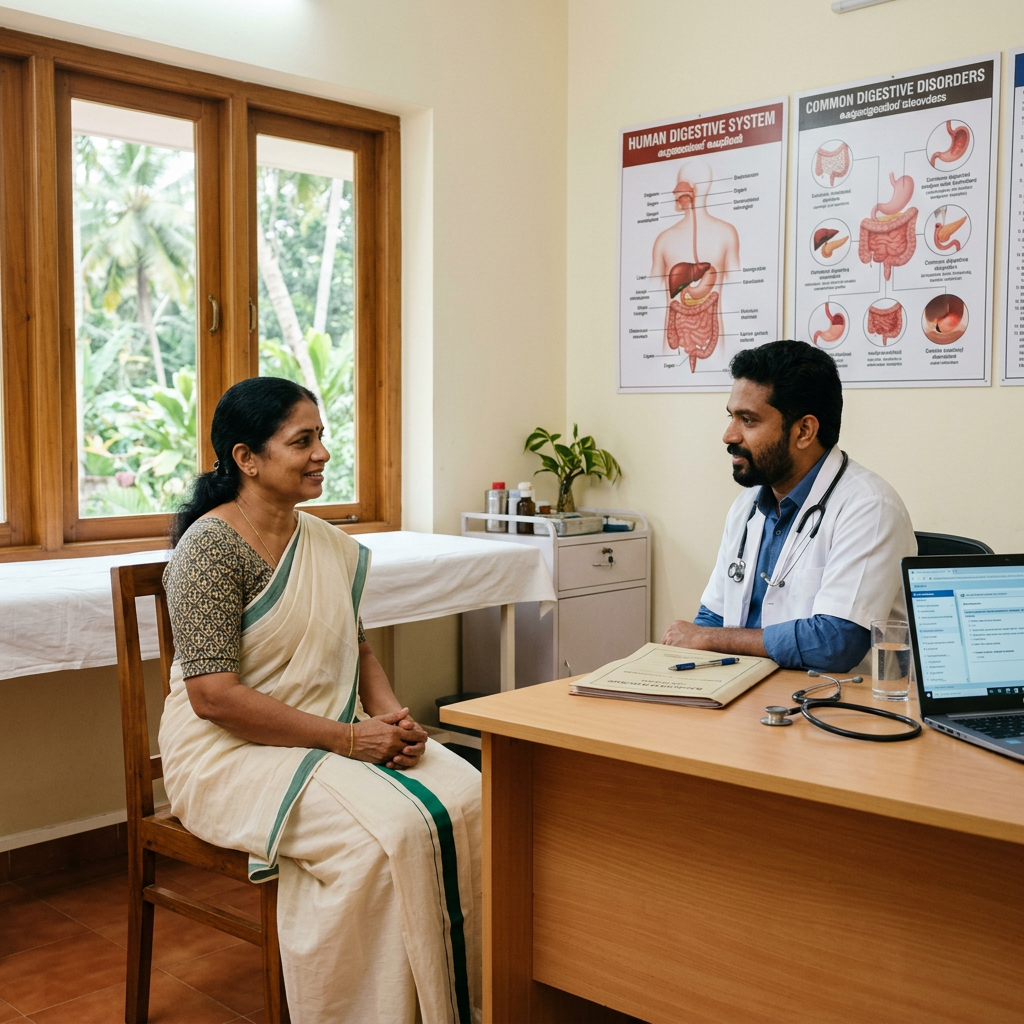
A visit to a proctologist or general surgeon for rectal bleeding is usually straightforward and far less uncomfortable than most people imagine.
The doctor will ask about your symptoms, medical history, and diet. A physical examination — including a brief digital rectal exam — can confirm the presence of external piles within minutes. For internal piles or any suspicion of a more serious cause, a simple procedure called proctoscopy allows the doctor to look inside the rectum directly.
In most cases, the cause is identified quickly, and a treatment plan can begin the same day.
The most important thing you can do right now
Do not ignore blood in your stool. Do not assume, and do not wait.
In Kerala, there is still a significant amount of shame and silence around conditions that affect the anal region. Many people suffer for months before seeking help — and by that time, a simple early-stage condition may have progressed unnecessarily.
If you have noticed blood after passing stool, the right next step is a consultation — not a web search, not a WhatsApp group, and not a pharmacy counter.
At My Healthy Kerala, we can help you understand your symptoms and connect you with the right specialist. Book a consultation here.
Leave a Reply